Automotive Stamping Dies vs. On-Demand CNC: What Actually Works for Rush Car Parts?
I'm a manufacturing emergency coordinator at a Tier 1 automotive supplier. I've handled 200+ rush orders in 9 years, including same-day turnarounds for Tier 1 and aftermarket clients.
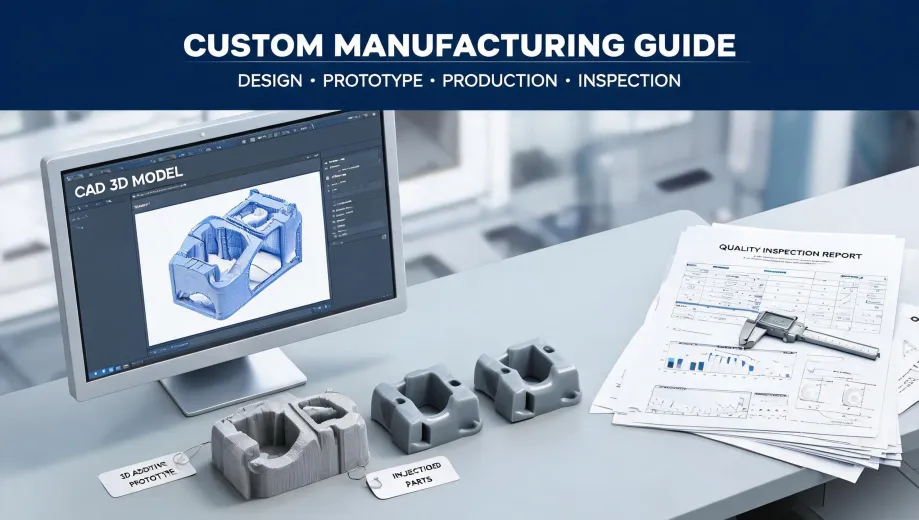
When a line is down or a launch date moves up, the question isn't 'which process is best?' It's 'which process can actually deliver in the window I have?' That's why I compare traditional automotive tooling—auto stamping die, automotive progressive die, mold makers, aluminum extrusions—against on-demand digital manufacturing—CNC machine car parts, sheet metal, 3D printing, quick-turn injection molding.
I'll compare five dimensions: lead time, upfront cost, design change flexibility, volume fit, and quality/documentation. Then I'll give scenario-based picks. No 'it depends' hand-waving.
Dimension 1: Lead Time — Where Rush Orders Live or Die
Traditional tooling: A new automotive progressive die often runs 12–20 weeks depending on complexity (Source: tooling lead-time surveys, 2024; verify current lead times). An automotive mold maker may need 8–16 weeks for a production injection mold. Custom automotive aluminum extrusions usually need 6–12 weeks for a new die, though standard profiles are faster.
On-demand manufacturing: CNC machine car parts can ship in 1–5 days. Complex 5-axis parts might take 1–2 weeks. Sheet metal and 3D printing are similar. Platforms like Xometry use an instant quoting engine, so you can price a batch in minutes instead of waiting for a manual quote.
Conclusion: If you need a part in 48 hours, traditional dedicated tooling isn't the answer—unless the die already exists. On-demand CNC is. In March 2024, 36 hours before a line shutdown, we needed 40 aluminum brackets. The progressive die was 14 weeks out. We used CNC and had parts in 36 hours. Cost $2,800 versus $800 at volume. But the line shutdown would have cost $22,000 per hour. To be fair, if we'd had 14 weeks, the die would have been cheaper per part.
Dimension 2: Upfront Cost and Tooling Investment
Traditional tooling: Setup fees for an automotive progressive die can range from $15,000 to $150,000+ depending on stations, material, and complexity (based on publicly listed tooling quotes, 2024; verify current pricing). A full production mold from an automotive mold maker can run $20,000–$200,000+. An aluminum extrusion die might be $3,000–$15,000.
On-demand manufacturing: No tooling. You pay unit price. CNC machined car parts often cost $30–$300 each at low volume, depending on material and complexity (based on on-demand manufacturing quotes, January 2025; verify current pricing). Quick-turn injection molding still has a mold cost, but it's usually lower than a full production tool.
Conclusion: Traditional wins at volume. On-demand wins at low volume, prototypes, and bridge production. The progressive die was the 'cheaper' option. What I mean is cheaper per part—after $60,000 in tooling. They warned me about hidden costs with 'cheap' tooling. I didn't listen. The die needed three repairs in the first month, and we lost two production days.
Dimension 3: Design Change Flexibility
Traditional tooling: Changes mean welding or modifying the die, re-cutting a mold, or making a new extrusion die. A major change to an automotive progressive die can take weeks and cost thousands. Minor adjustments may be possible with inserts, but you're still limited by the tool.
On-demand manufacturing: Change the CAD, re-quote, re-machine. CNC has no tooling. 3D printing is even faster for form-fit checks. Quick-turn injection molding still has a mold, but the mold is cheaper to modify or replace than a production tool.
Conclusion: If the design isn't frozen, on-demand wins. I went back and forth between modifying the existing progressive die and ordering CNC bridge parts for two days. Modifying offered lower unit cost; CNC offered speed. Ultimately chose CNC because the customer was still iterating on the bracket geometry. Looking back, I should have made that call on day one.
Dimension 4: Volume Fit and Part Geometry
Traditional tooling: Stamping car parts and progressive dies excel at high volume—10,000+ pieces—with consistent thin-gauge sheet metal. Automotive aluminum extrusions excel at constant cross-section, high volume. Mold makers serve plastic and rubber parts at production scale.
On-demand manufacturing: CNC machine car parts fit low-to-mid volume, complex geometry, and tight tolerances. 3D printing is for prototypes, fixtures, and non-critical parts. Sheet metal handles brackets and enclosures. Quick-turn injection molding covers roughly 100–10,000 parts.
Conclusion: Don't use CNC for 100,000 simple washers. Don't use a progressive die for 50 prototype brackets. The volume curve is the clearest dividing line. Here's the counterintuitive one: for low-volume automotive aluminum extrusions, CNC from billet often beats extrusion. Why? Extrusion dies have setup costs and minimum order quantities. If you need 20 custom profiles, extrusion is the wrong lane.
Dimension 5: Quality, Traceability, and Risk
Traditional tooling: Automotive suppliers are often IATF 16949 certified. According to IATF (iatfglobaloversight.org), IATF 16949 is the automotive quality management standard. You get PPAP, material certs, and traceability built into the production process.
On-demand manufacturing: Platforms like Xometry offer ISO 9001, AS9100, and IATF 16949 depending on the partner shop. But not every rush order gets full PPAP. You need to ask. For a non-critical bracket, an inspection report may be enough. For a safety-critical part, don't compromise.
Conclusion: Traditional wins on documented production discipline. On-demand can win on speed, but you must specify quality requirements. The risk isn't the process; it's the missing paperwork. We paid $800 extra for full dimensional inspection on a rush CNC order. It saved a $12,000 recall. That's a trade I'll make every time.
Scenario-Based Picks: What I'd Do in Your Shoes
- 1–50 parts, 1–5 days: CNC machine car parts via an on-demand platform. Upload CAD, get an instant quote, ship. This is the emergency lane.
- 100–5,000 parts, design stable: Quick-turn injection molding or sheet metal. Compare bridge tooling against CNC. Sometimes CNC is still cheaper than tooling.
- 10,000+ stamped car parts: Auto stamping die or automotive progressive die. Invest in tooling. The unit cost will crush on-demand.
- Custom aluminum profiles, high volume: Automotive aluminum extrusions. For prototypes or low volume, CNC from billet.
- Line down, die broken: Don't wait for the die repair. Get CNC or 3D printed temporary parts, keep the line running, then fix the die. I've done this twice. The first time we waited 10 days for die repair and lost $180,000 in production. The second time we used CNC bridge parts in 48 hours and kept the line running.
The Bottom Line
Traditional automotive tooling is still the right answer for high-volume stamping, progressive dies, mold making, and aluminum extrusions. It's not obsolete. The fundamentals haven't changed. But the execution has transformed. What was best practice in 2020 may not apply in 2025.
On-demand manufacturing is the right answer for prototypes, bridge production, urgent repairs, and low-volume CNC car parts. The mistake is treating them as competitors. They're two lanes. Use the one that matches your deadline, volume, and risk.
In my role, I've stopped asking 'Can we afford the die?' and started asking 'Can we afford to wait for the die?' That shift—from 2020 to 2025—is the real change.
Lead times and pricing are general references. Verify current rates and quality requirements with your supplier.