How Much Does a 3D Printing Service Cost? Xometry, Aerospace Reviews, and a Lathe Test Part Reality Check
-
The short answer: 3D printing service cost is not the quote
-
Why I still use Xometry for first-pass quoting
-
What actually drives 3D printing service cost
-
Lasers in additive manufacturing: where aerospace is heading
-
Where Xometry and instant quoting fall short
-
The small-order rule that saved our budget
The short answer: 3D printing service cost is not the quote
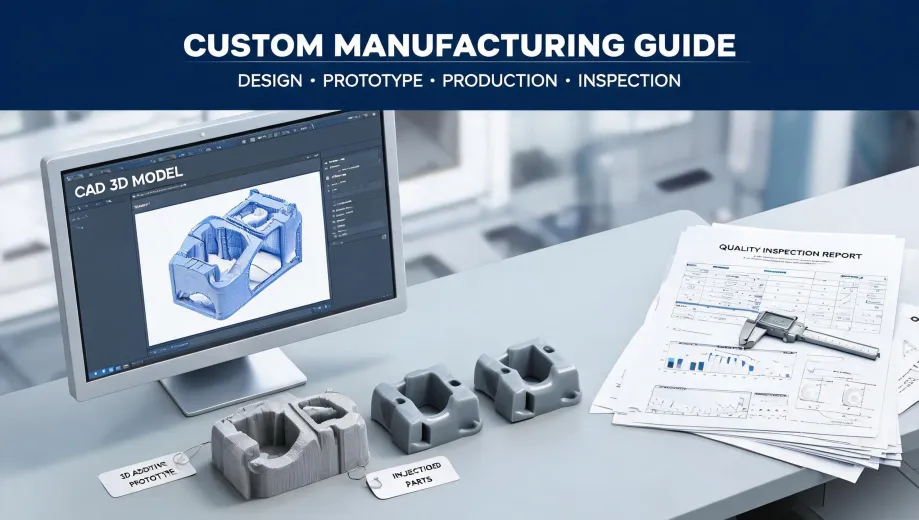
For most engineering teams, the real cost of a 3D printing service is 2x to 4x the instant quote once you add material certification, post-processing, inspection, lead time, and risk. If you're buying aerospace parts, the multiplier can be higher. Xometry is a strong first stop for instant CNC, injection molding, and 3D printing quotes - especially when you're testing a design or ordering one-off parts. But I wouldn't treat any instant quote as a final aerospace purchasing decision until I've validated the process, the material, and the supplier behind it. That usually means a lathe test part for CNC, or a certified test coupon for additive.
I'm a procurement manager at a 90-person aerospace components company. I've managed our CNC and additive manufacturing budget - about $240,000 annually - for seven years. I've negotiated with 30+ vendors and tracked every order in our cost system. I still kick myself for the March 2023 order that looked like a bargain. A bracket quote came in at $1,850 from a low-cost 3D printing service. Xometry's instant quote was around $2,300. I went with the cheaper option. The parts failed fatigue testing because of porosity, and the redo plus engineering time cost us $6,800. If I'd paid the extra $450 up front, we'd have saved three weeks and a lot of explaining. That's the moment I stopped comparing 3D printing service costs by unit price alone.
Why I still use Xometry for first-pass quoting
Xometry's instant quoting engine is genuinely useful. I can upload a STEP file at 10 p.m., get a DFM-style price for CNC machining, injection molding, or 3D printing, and know whether a design is in the right ballpark. For small orders, that matters. When I was starting out, the vendors who treated my $200 orders seriously are the ones I still use for $20,000 orders. Small doesn't mean unimportant - it means potential. Xometry built its model around one-off and low-volume work, so a single prototype doesn't get ignored. That's not a small thing in this industry.
But I've learned to read the quote carefully. Xometry is a marketplace and a platform, not a single machine shop. Your part may be routed to a partner in its network. That's fine for many jobs, but it means quality can vary by process and supplier. If you search for xometry aerospace 3d printer reviews, you'll find a mix: engineers who got beautiful MJF nylon parts in four days, and engineers who got DMLS parts with support-removal marks or inconsistent surface finish. Both can be true. The review isn't the data point - the process control is.
When I need a quick CNC turning check, I order a xometry lathe test part. Nothing fancy: a 1.5-inch diameter 6061 aluminum shaft with a shoulder, a 1/4-20 threaded section, a +/-0.001-inch OD tolerance, and a 63 RMS surface finish callout. It's cheap enough to approve without a committee, and it tells me whether the lathe shop can hold tolerance, deburr properly, and document inspection. I've used it with Xometry and with local shops. The results have been mostly good, but not identical. One supplier hit the tolerance but missed the thread class. Another nailed the thread and sent a CMM report without asking. That's the kind of detail that shows up later on a $12,000 aerospace order.
What actually drives 3D printing service cost
If you're asking how much does a 3D printing service cost, the honest answer is: it depends on process, material, size, tolerance, and paperwork. Here's a practical range I've seen from publicly listed quotes and our own purchase orders in early 2025. Treat these as budgeting ranges, not firm prices. Verify current rates with your vendor.
- FDM prototype: $20-$150 per part for standard PLA or ABS, simple geometry, no critical tolerances.
- SLA/DLP resin: $30-$200 for small visual models or patterns, depending on resolution and finish.
- SLS nylon: $50-$300 for functional brackets, enclosures, and ducting. MJF is often similar or slightly cheaper at volume.
- DMLS/SLM metal: $300-$1,500+ for a small aluminum or stainless part. Titanium, Inconel, or aerospace-certified material can push a single part past $2,500 before inspection and post-processing.
- CNC turning (lathe test part): $80-$400 for a simple test part in aluminum. Tight tolerances, exotic alloys, or full inspection can add $200-$1,000.
- Injection molding: tooling usually starts around $3,000-$8,000 for a simple prototype mold and can exceed $50,000 for production tooling. Part price drops with volume.
Those numbers don't include the hidden costs that wreck a budget. In our 2023 audit, 31% of our budget overruns came from post-processing, inspection, and rework - not the quoted part price. We now require a TCO line for every order over $2,500. It includes:
- Material certification and traceability
- Support removal, machining, polishing, and heat treat
- Dimensional inspection and first-article reports
- Shipping, tariffs, and packaging
- Engineering time to fix DFM issues
- Schedule risk if the part is late
That last one is the killer. A $400 part that arrives two weeks late can cost more than a $1,200 part that arrives on time. In aerospace, a missed test window can delay a program by a month. I've seen it happen.
Lasers in additive manufacturing: where aerospace is heading
If you're following 3d printing aerospace news today, you know lasers are a big part of the story. Laser powder bed fusion - often called DMLS or SLM - uses a fiber laser to melt metal powder layer by layer. It's how you get complex brackets, fuel nozzles, and heat exchangers that would be impossible or wasteful to machine. The technology is real, and it's already flying.
But lasers in additive manufacturing are not magic. The same laser that gives you fine features can also leave porosity, residual stress, or anisotropic properties if the parameters aren't controlled. That's why aerospace buyers care about ASTM/ISO standards, machine calibration, powder reuse limits, and post-build heat treat. ISO/ASTM 52900 gives you the shared vocabulary for additive manufacturing categories. AS9100D is the quality management system most aerospace suppliers need. For laser powder bed fusion, you also want to see material specs, build logs, and inspection reports - not just a shiny review.
I've had good results with laser-based additive parts from Xometry's network. I've also had a build come back with support marks inside a channel that needed five hours of manual cleanup. The quote didn't mention that. The lesson: if the geometry is complex, ask about support strategy before you order. A good supplier will tell you where the risks are. A great one will suggest a design change that saves money.
Where Xometry and instant quoting fall short
I'm not saying Xometry is the answer for every aerospace job. It's not. If your part needs Nadcap-approved special processes, full PPAP, ITAR-controlled data, or a dedicated AS9100D audit trail with a single named supplier, you may need a traditional aerospace shop. Xometry can handle many aerospace jobs, but the platform model means you should verify who is actually making the part. For flight-critical hardware, I still require a first-article inspection, material certs, and a process audit before I release a production order.
There's also a limit to instant quoting. A quote can't see a thin wall that will warp, a deep pocket that needs a specialty tool, or a tolerance stack that will fail assembly. When I compared our instant quotes with the final invoices over a full year, I found that about 18% of orders had some adjustment - usually due to post-processing or inspection. That's not a knock on Xometry. It's true of every platform. The quote is a starting point, not a contract.
The small-order rule that saved our budget
Here's my rule: never let a supplier's minimum order or attitude scare you away from testing. Order the small part. Order the lathe test part. Order one 3D print in the actual material. If a vendor treats your $150 order like it matters, they'll probably treat your $15,000 order the same way. If they treat it like a nuisance, you just saved yourself a much more expensive mistake.
That's why I keep using Xometry for early-stage quotes and small-batch work. It's not always the cheapest, and it's not always the fastest. But it lets a small team get real pricing without begging for a sales call. For a startup or a skunkworks project, that's worth a lot.
So how much does a 3D printing service cost? Budget $75-$300 for a plastic prototype, $300-$1,500+ for a metal part, and add 30-100% for aerospace documentation and post-processing. Then add the cost of being wrong. If you can't afford the latter, pay for the test part first. I wish I had.