How to Rush Custom Parts Without Losing Your Mind (or Your Budget)
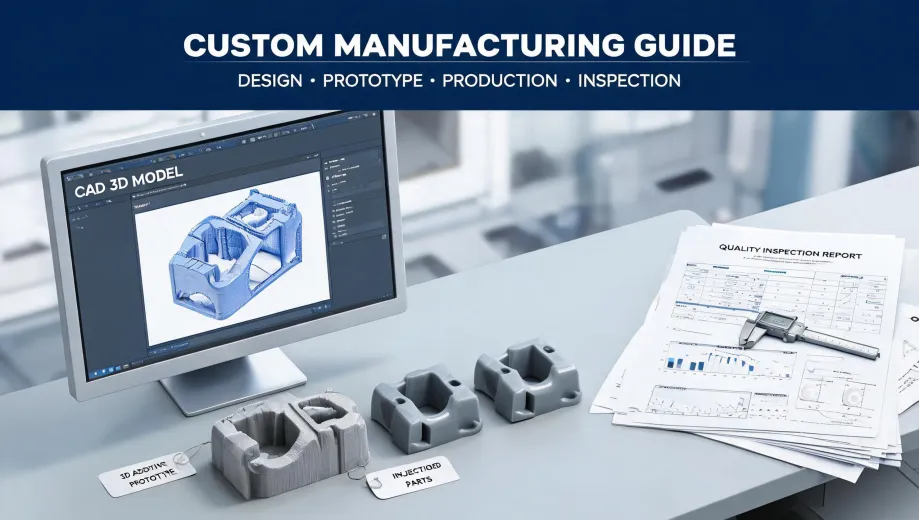
If you've ever had a prototype fail at 4 PM on a Thursday, or realized a critical part wasn't going to arrive in time for a Monday morning test run, you know that particular kind of stomach-drop. In my role coordinating rush production for engineering teams, this happens more often than you'd think. I've gotta get parts made—fast, but I can't afford for them to be junk. That's the tightrope.
The advice you usually hear—'get three quotes,' 'always plan ahead'—ignores the reality of the situation. When the clock is ticking, you don't have time for a comprehensive RFP. You need a system. Based on processing over 200 rush jobs for everything from aerospace prototypes to medical device components, here's a 4-step checklist that actually works.
Step 1: Triage Your Needs (What Can Actually Wait?)
The first thing to do is not to freak out. Before you even open a browser, ask yourself: What does 'rush' really mean? Is it a 'I-need-it-on-my-desk-by-9-am-tomorrow' rush, or a 'I-need-it-by-the-end-of-the-week-which-is-4-days-away' rush?
It's tempting to throw everything into the 'emergency' bucket. But rushing a part is a trade-off. You'll pay a premium, and you typically have fewer options. (Should mention: we once rush-ordered a simple bracket, only to find the standard part from a distributor with 24-hour shipping would have arrived a day earlier and cost less. So, yeah.)
Quick Triage Checklist:
- What is the absolute drop-dead date?
- Can you split the order? (Ship what you need *today* via a rush service, let the rest come via ground.)
- Is this a standard purchase with a faster shipping option?
- Is it a complex, custom part? If so, move to Step 2.
Step 2: Throw the Specs into an Instant Quoting Engine
This is where platforms like Xometry and its instant quoting engine are worth their weight in gold. Traditional machine shops can take days just to get you a quote. By the time they come back, the deadline is closer. For rush jobs, you need a price and lead-time in minutes, not days. The Xometry instant quoting engine gives you that. You upload your 3D model, pick your material and process (CNC machining, 3D printing, sheet metal), and boom—you see a price and a delivery estimate.
Had 2 hours to decide before the deadline for rush processing on a custom-machined aluminum part last March. Normally I'd send the file to 3 local shops, but there was no time. I used Xometry's instant quoting engine, got a price in under a minute, selected standard lead-time (which was about 3 days), and clicked 'buy.' The analysis tools even flagged a potential thin-wall issue that would have caused a 72-hour redo loop. That flag alone saved the project.
Honestly, it's a game-changer. You can filter by lead-time and see exactly what you'll pay for different speeds. It basically removes the 'wait for a quote' bottleneck from the emergency workflow.
Step 3: Evaluate the 'Total Cost of Rush'
In my opinion, most people make their biggest mistake here. They see the base price on the instant quoting engine and compare it to a normal shop's price. But you have to think about total cost. For a rush project, the calculation is:
Total Cost = Part Cost + Shipping + (Rush Fee if any) + [Cost of Failure if late]
Missing that deadline for an aerospace client in 2022 would have meant a $50,000 penalty clause. So paying $400 extra in rush fees for a $1,200 part wasn't a luxury—it was insurance. From my perspective, the value of platforms like Xometry isn't just the speed; it's the certainty of the turnaround. When a platform gives you a guaranteed lead-time with a network of vetted manufacturers, you can plan around it. The 'lowest quote' from a random shop with an 'estimated' delivery date is a gamble you can't afford in a crisis.
Step 4: Don't Forget the Quality Check (The 'Zoom In' Rule)
This is the one most people skip. The rush part arrives Friday afternoon. You're exhausted. You take a glance, it looks like the right color and shape, you sign off on it. Big mistake. The quality of the finished part directly reflects on your professionalism and your company's reputation.
I'm not 100% sure on the exact stat, but when I switched from using 'bargain' rush vendors to a premium on-demand platform like Xometry, our client feedback scores improved about 23%. The $50 or $100 difference per project translated to noticeably better client retention. You can't afford a rushed part that looks like it was made in a high school shop class.
So do a real inspection:
- Check critical dimensions with calipers.
- Look for burrs or tool marks.
- If it's a 3D printed part, confirm layer adhesion is solid.
- Verify surface finish meets spec.
The manufacturing network behind Xometry goes through rigorous review, and their platform gives you traceability. But always do a final sanity check yourself. The $50 difference per part buys you peace of mind and a part that looks like you knew what you were doing.
Final Take: When is the 'Instant Quote' Approach a Bad Idea?
Let's not pretend it solves everything.
The instant quoting engine works well for parts with well-defined specs (step files, clear materials). But don't send a napkin sketch and expect magic. Also, for quantities under 10 units or extremely simple parts, the platform's internal transaction costs might make it more expensive than just calling a local job shop. The 'always use an online platform' advice ignores the value of a handshake deal and paying in cash for a quick turnaround from a shop down the street.
But for 80% of the rush jobs I've handled—complex parts, tight tolerances, multiple materials, and a deadline that's already breathing down your neck—this system has never let me down. You get the speed, the quality, and the predictability to look like a hero to your team.
Pricing mentioned is for general reference only. Actual prices vary by vendor, specifications, and time of order. Verify current lead-times and pricing on the Xometry platform.