I Thought a CNC Router Was a Milling Machine. That $3,200 Mistake Changed How I Order Parts
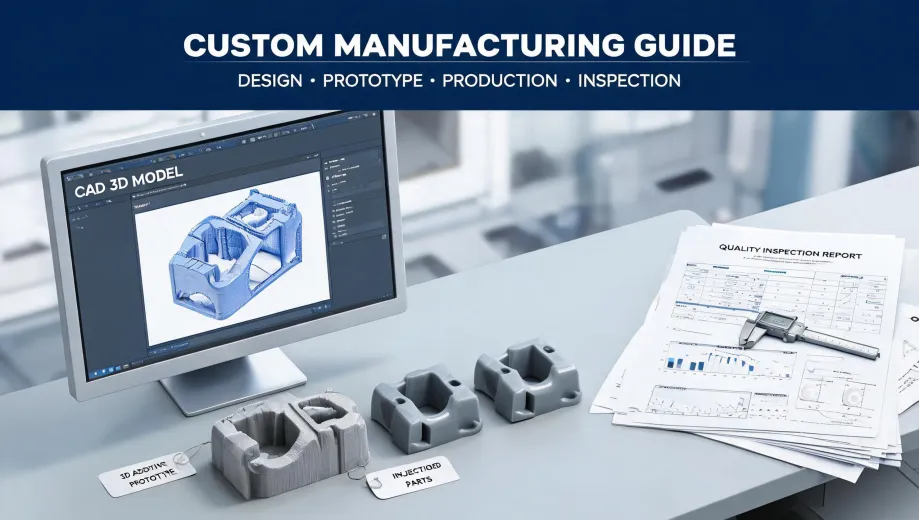
When the gray FedEx truck pulled up, I had that little “new parts day” feeling. I don't get it much anymore. But these were the first 60 sensor mounts for a product launch, so I walked to the loading dock like a kid going to get pizza.
That feeling ended about thirty seconds after I opened the first box. The edges looked like they'd been chewed by a hungry robot. Chatter marks ran along every pocket, the side walls had that wavy “I fought the tool and the tool won” texture, and at least three threaded holes looked like they'd drifted just enough to make me nervous. I grabbed the second box. Same story. Third box. Same. By the fourth box I wasn't checking anymore—I was just doing the math on the money down the drain.
This is the story of what I now call The Router Incident.
How I Ended Up in This Mess
I've been handling custom manufacturing orders for a small hardware company since 2017. My official title is product engineer, but for the last few years I've probably spent more time in procurement than in CAD. I've made a lot of mistakes. I've tracked all of them. That's a weird thing to be proud of, but it's true.
A lot of the quick stuff goes through Xometry. The xometry cnc quoting engine is honestly kind of magical sometimes—you upload a file, pick a process, get a number in seconds. It lured me into a false sense of competence. I thought I knew more about manufacturing than I actually did.
In May 2023, I needed 60 brackets in 6061 aluminum. Simple part: 4 inches by 2.5 inches, two slots, four M3 threaded holes, no surface finish requirement beyond “not ugly.” I got a quote from Xometry for around $2,400 and a 7-day lead time. That was fine. But a supplier I'd visited a few weeks earlier called back and offered $1,600 if they could run it on their CNC router instead of the milling machine.
I'd toured their shop and seen the VMC 855. It's a legitimate vertical machining center—the kind of machine that weighs a few thousand pounds, has flood coolant, and can hold tight tolerances all day. I assumed the CNC router would be the same thing in a different shape. The owner said, “It's just a different way to do the same job.” I believed him. I didn't ask about the difference between a CNC router vs milling machine because I figured it was a terminology thing. It's not.
The Parts Looked Fine on My Screen
In my defense, the DFM check passed. The file looked clean, measurements made sense, and the finish callout was basic. But that was also where I got lazy. “No surface finish spec” means a lot more than “the part will look okay.” It means the manufacturer gets to choose how to make it—and sometimes the cheapest way isn't the best way.
A CNC router is genuinely great for wood, plastics, and light aluminum work if you know what you're doing. But it is not a milling machine. A proper mill has a rigid frame, heavy ball screws, and generally a lower spindle speed with more torque. The VMC 855 was built for metal removal. A router, on the other hand, is basically a large gantry with a high-speed spindle. It can cut aluminum, but it needs light passes, sharp tooling, and conservative feeds. The toolpath I provided—or rather, the automated toolpath the platform handed me—was written for a machine that flexes a little and pushes through. On the router, it produced a concert of chatter and a pile of scrap.
“Sure, they both move a rotating cutter through material,” a machinist told me later. “But a router is a carpenter's tool that can handle light metal. A mill is a metal-cutting machine that uses rigidity instead of speed.”
The Laser Mistake I Keep Making in Different Forms
That same month, I also ordered a small batch of acrylic covers. I found a shop with a 90W CO2 laser and assumed a laser is a laser. I didn't ask what the CO2 laser depth of penetration would be for my material at the power and speed they planned to use. I didn't even realize that was a question I should ask.
Here's what I know now: A CO2 laser cuts or engraves based on how much energy the material absorbs, and the effective depth of penetration depends on power, spot size, feed rate, and assist air. On acrylic, a CO2 laser is excellent. But ask someone who actually works with lasers, and they'll tell you: the same beam on bare aluminum barely does anything useful at that power level. It's not because the laser is bad. It's because the process has a boundary.
Same lesson, different machine. I kept expecting one “CNC” category or one “laser” category to cover everything. That's like expecting one job title to cover me and a rocket scientist.
The Redo
So the brackets got rejected. The supplier offered to “fix” them by tweaking a few dimensions, but by then we were already two days behind. I swallowed my pride and ordered the same parts through Xometry's CNC service—this time with a note about required machine type and edge quality. It cost about $2,800 plus overnight shipping. The parts showed up in four days and they were clean. No drama. And I had just paid $1,600 for a pile of scrap that taught me a $4,400 lesson.
The Lesson: Know Your Process Boundaries
Before I tell you what actually changed, I want to be honest: this wasn't the supplier's fault and it wasn't Xometry's fault. I chose the cheaper quote. I didn't ask enough questions. I didn't dig into the process boundary between a CNC router vs milling machine. But I also didn't have a framework for asking those questions, so I made one.
Now when I order parts, I ask three things:
- Which specific machine will this run on? Not “CNC” or “mill”—the actual machine model.
- What kind of finish can this process hold on my material? Edge quality, tolerances, surface texture.
- What's the process owner's comfort level? If they hesitate, I listen.
The weirdest part? The boundary works both ways. The shop owner should have said “a router isn't the right process for tolerances this tight” instead of taking my money. I should have asked what I didn't know. These days, I'd rather work with a specialist who says “this isn't our strength, here's who's better” than a generalist who overpromises. The vendor who admits their limits earns trust for everything else.
One more thing: if you're searching for a xometry injection molding contact email because you have a mold question, don't do what I did and waste two days looking for a human address. Start an RFQ with your notes. An engineer responds through the platform. That's the same principle, honestly—stop assuming you know the right door to knock on. Use the process that's designed for it.
I still get a little flutter when a shipment arrives. But now I open the box, check the edge quality, measure a few dimensions, and update my checklist. The next mistake I make won't be for lack of asking.
If you take anything from my story, I hope it's this: it's okay to be wrong about the difference between a router and a mill, or to not know what CO2 laser depth of penetration means for your material. It's not okay to pretend vague confidence is the same as understanding. Know what you know, ask about what you don't, and let the experts tell you what they're actually good at.