Small Orders, Big Friction: Why Custom Manufacturing Still Punishes Small Buyers
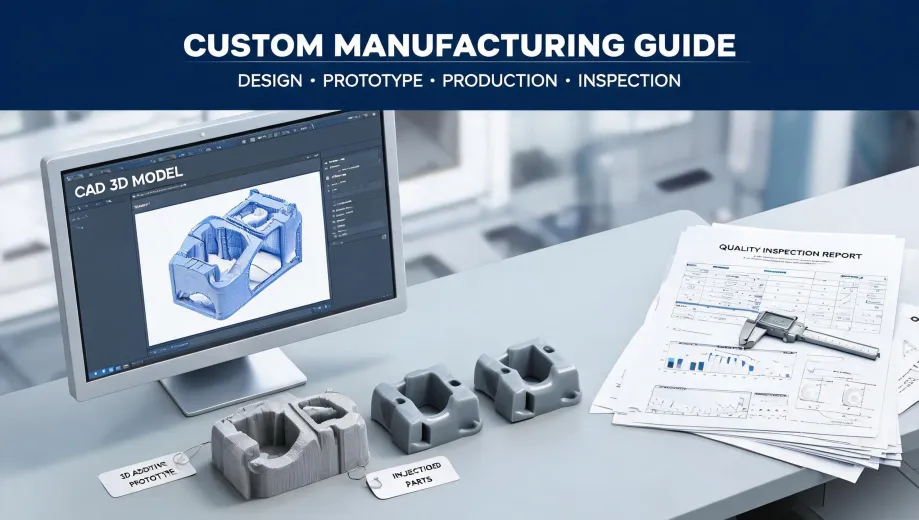
Small orders shouldn’t be a problem. So why do they feel like one?
I’m the office administrator for a 120-person company. I manage all custom part and vendor ordering—roughly $180,000 annually across 12 vendors. I report to both operations and finance. And I can tell you that the hardest part of my job isn’t finding a supplier. It’s getting a supplier to take a small order seriously.
Last month, an engineer needed five machined brackets for a test fixture. Five. Not five hundred. I sent the drawing to a local shop. No response. I tried a CNC machining supplier in Vietnam that advertised low unit costs. They replied three days later asking for a 500-piece minimum. I tried a 3D printing service. They asked if the part was aerospace-critical, then quoted a lead time that would miss the test window.
Not ideal. Not unusual either. Small orders are where prototypes, repair parts, and first articles live. They’re also where purchasing admins get squeezed between engineering, finance, and vendors who don’t want the hassle.
The surface problem is minimums. The real problem is quoting friction.
When I first started managing custom part orders in 2021, I assumed the problem was price. I thought if I found the cheapest quote, I was doing my job. Three rush jobs later, I realized the problem wasn’t price. It was quoting friction.
Traditional shops have real fixed costs. Setup, programming, material handling, inspection, invoicing. A five-part order might take almost as much administrative work as a five-hundred-part order. So some shops set minimums. Others just ignore small RFQs because the sales incentive isn’t there.
I get it. I don’t like it, but I get it. What I don’t accept is the idea that small means unimportant. In my opinion, small means potential. The vendors who treated my $200 orders seriously are the ones I still use for $20,000 orders.
It took me three years and about 200 orders to understand that a responsive small-order process matters more than a low unit price. That realization changed how I evaluate every supplier.
Why small orders expose bigger process gaps
Small orders don’t just test a vendor’s patience. They test the buyer’s process too. And that’s where the deeper problem shows up.
1. Manual quoting doesn’t scale down
A shop that quotes by email and spreadsheet can handle a big order. It can’t handle fifty small ones. Every RFQ goes into a queue. The queue is prioritized by revenue. Your five brackets sit at the bottom.
That’s why something like Xometry’s instant quoting engine gets attention. You upload a CAD file, choose a process, and get a price without waiting for a human to triage your order. As of January 2025, that kind of automation is still not universal in custom manufacturing. But it changes the math for small buyers.
Does it replace human review? No. I still check tolerances, material specs, and certifications. But it removes the first barrier: silence.
2. Buyers confuse additive and subtractive processes
Here’s a question I hear from new engineers and even some procurement folks: are 3D printers CNC machines?
Short answer: no. Both are computer-controlled, but they work in opposite directions. CNC machining is subtractive—it cuts material away. 3D printing is additive—it builds material up. ISO/ASTM 52900:2021 defines additive manufacturing terms and helps separate the two categories.
Why does that matter for purchasing? Because if you send a 3D-printable part to a CNC shop, you may get a quote that’s ten times higher than expected. If you send a CNC part to a 3D printing service, you may get a part that doesn’t hold tolerance. The wrong process creates delays, scrap, and blame.
I’ve learned to ask three questions before I request a quote: What’s the intended load? What’s the tolerance? Is this for a prototype or production? Those answers usually point to the right process.
3. Material inconsistencies make small runs risky
A filament maker for 3D printers can make or break a prototype run. I’ve had a spool that printed beautifully for the first half, then started clogging because the diameter varied. The engineer blamed the printer. The printer vendor blamed the filament. I was stuck in the middle.
For small orders, material consistency matters more, not less. You don’t have a thousand parts to average out the defects. You have five. If one fails, you’re at 80% yield.
4. Cheap sourcing can create finance problems
In 2022, I found a great price from a new vendor—$1,800 cheaper than our regular supplier. I ordered 50 parts. They couldn’t provide a proper invoice, just a handwritten receipt. Finance rejected the expense report. I ate $2,400 out of the department budget. Now I verify invoicing capability before placing any order.
That experience taught me that the lowest quote isn’t the lowest cost. It also taught me that small orders are where compliance shortcuts happen. Nobody wants to run a full vendor qualification for a $300 order. But that’s exactly when invoices get sloppy and certifications get skipped.
5. Aerospace work raises the stakes
If you’ve been searching for Xometry aerospace 3D printer reviews, you’re probably trying to separate marketing claims from reality. I understand. I can’t validate every aerospace job, and I won’t pretend to. But I can tell you what I check.
For aerospace parts, I look for AS9100D flow-down. AS9100D is the aerospace quality management standard. I also check whether the supplier can provide material certs, inspection reports, and traceability. A fast quote is useless if the paperwork won’t survive an audit.
That’s why I have mixed feelings about automated quoting. On one hand, it’s fast. On the other, it can hide the human judgment you need for aerospace tolerances. I compromise by using platforms for initial pricing, then asking a human to confirm the critical details.
6. Vietnam sourcing is not a magic bullet
I’ve looked at CNC machining suppliers in Vietnam. The pricing can be attractive. The communication can be slow. The invoicing can be inconsistent. That doesn’t mean you should avoid them. It means you need a process.
I now ask for a sample invoice before I place an order. I confirm lead time in writing. I ask who handles quality issues. If the answers are vague, I walk. Not because the supplier is in Vietnam, but because vague answers are a red flag anywhere.
What ignoring small orders actually costs
The cost isn’t just the part. It’s the ripple.
A delayed bracket can push a test fixture back a week. A week can push a design review back. A design review can push a customer commitment. I’ve seen a $200 order delay a $20,000 project. Nobody puts that on the invoice.
Then there’s shadow purchasing. When purchasing is slow or unresponsive, engineers order on personal credit cards. Finance hates it. I hate it. But it happens because the official process failed the small order.
There’s also the compliance cost. ISO 2768-1 general tolerances apply when drawings don’t specify individual tolerances. If a small shop ignores that, you get scrap. If you’re in aerospace, AS9100D flow-down isn’t optional. If you’re using 3D printing, ISO/ASTM 52900:2021 gives you the vocabulary to ask the right questions.
And there’s the relationship cost. Small buyers remember who treated them well. They also remember who ignored them. Today’s five-part order is tomorrow’s production contract. That’s not sentiment. That’s pipeline.
Honestly, I’m not sure why some suppliers still hide their minimums until after you send drawings. My best guess is they want to qualify you first. But that wastes everyone’s time. If you have a minimum, say it upfront. I can work with a clear no. I can’t work with silence.
The fix is simpler than the problem
After five years of managing these relationships, I’ve come to believe the solution isn’t finding a unicorn vendor who loves tiny orders. It’s removing friction from the quoting step.
For small custom parts, I use an on-demand manufacturing platform like Xometry. The Xometry instant quoting engine lets me upload a CAD file and get a price without a sales call. That doesn’t mean I skip due diligence. I still verify certifications, invoices, and lead times. But it means the small order gets a fair shot.
I also keep a backup list. One local shop for emergencies. One platform for speed. One overseas supplier for cost-sensitive, non-critical parts. Redundancy sounds expensive until you need it.
And I ask better questions: What’s the minimum? What’s the lead time? What’s the invoicing process? What certifications do you hold? Can you provide material certs?
If you’re a small buyer, you’re not a nuisance. You’re a future account. Act like it. And expect vendors to do the same.
This was accurate as of January 2025. Manufacturing capacity, platform policies, and certification requirements change fast. Verify current lead times and standards before you commit.