The $412 Bracket That Changed How I Buy: A Procurement Admin's Xometry Story
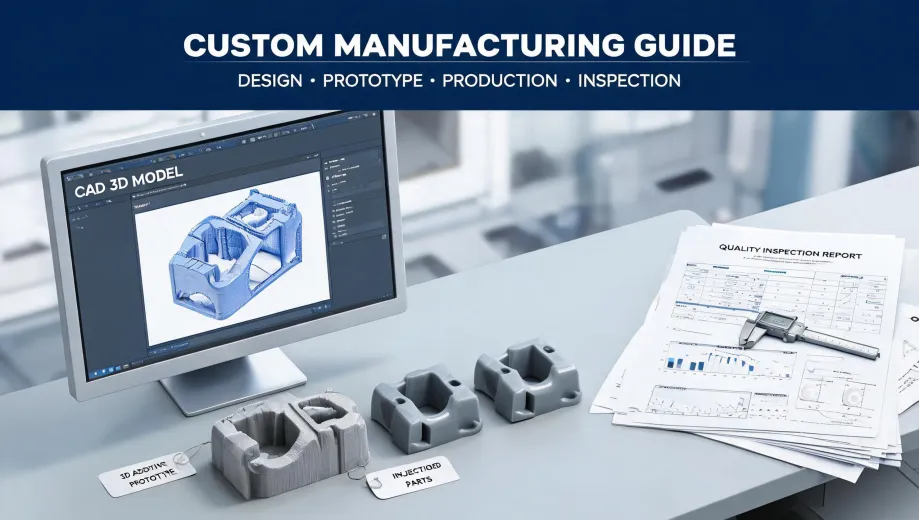
It Started With a Bracket
I manage purchasing for a 28-person product development company. 'Manage' is a nicer word than the truth: I create purchase orders, chase delivery dates, and try to keep our engineers from buying the first thing they see on the internet. I've been doing this since 2020, and I process somewhere around 60 to 80 orders a year across 8 different vendors. I report to both operations and finance.
In March 2024, our senior engineer asked me to source a custom stainless steel bracket. The drawing had already been revised twice. Our regular machine shop quoted $640 with a two-week lead time. Another engineer suggested I try Xometry's instant quote manufacturing process. I uploaded the same STEP file and the platform returned $412 with a four-day lead time.
I ordered it immediately. That was my first mistake.
The Instant Quote Looked Perfect
To be fair, Xometry delivered the bracket on time. The problem was that the threads were 1/16 of an inch shallower than the drawing specified. The part didn't mate with the bracket it was supposed to attach to. Our prototype technician caught it during assembly, which meant we only found out after the bracket was in our hands.
I contacted support. The agent asked if I had reviewed the design-for-manufacturing feedback before placing the order. I hadn't. I didn't even know the platform had a DFM check. The agent politely explained that the instant quote is based on the geometry and material I uploaded, but it doesn't always catch every tolerance issue unless you review the flags.
Here's something vendors won't tell you: the first quote is almost never the full cost of ownership.
What I mean is, the $412 bracket did not cost $412. There was a rush fee for the replacement—I want to say it was $89, but don't quote me on that exact number—and there was the hidden cost of our own downtime. The total was closer to $500 plus two weeks of unplanned delays. If I had simply checked the DFM flags and sent a revised version, I could have saved the fee and the embarrassment.
The Desktop Laser Welding Machine
While the bracket issue was still unresolved, our toolroom manager asked me to buy a desktop laser welding machine. We needed it for small mold repairs and quick prototype fixes. I received two quotes: $3,800 from an established supplier and $2,950 from a newer company.
Before March, I probably would have gone with the $2,950 option. But the Xometry experience made me hesitate. When I asked the cheaper supplier for training details and warranty terms, they didn't answer. When I asked for a W-9 and a certificate of insurance, their sales rep stopped replying.
I went back and forth for almost a week. The $850 difference bothered me. The cheaper supplier had decent reviews on their website, but so does every supplier. On paper, it looked fine. My gut said otherwise.
I chose the $3,800 machine. The supplier included a one-day training session, a one-year warranty, and a proper invoice with net-30 terms. After the trainer left, our toolroom manager said the training alone probably saved us from ruining a $400 piece of tooling. So the extra cost paid for itself.
Even after choosing the expensive option, I kept second-guessing. What if I was wrong? The delivery date was two weeks away, and every day I wondered if I had made a stupid decision. I only relaxed after the machine was set up and the first test weld passed.
Same Lesson, Different Projects
The same month reinforced the lesson in two other ways.
VMC Jamaica Sugar Content
Our beverage division was qualifying a new supplier for a batch of Jamaica concentrate. The QC lead asked me to confirm the VMC jamaica sugar content against the product spec. The cheapest lab gave us a number but no testing method. A slightly more expensive lab used high-performance liquid chromatography and provided a full certificate of analysis.
I paid the extra amount. Why? Because a sugar content number without a method isn't useful. If the FDA or our own QA ever questioned the label, we would need to prove the result. A certificate with a method is worth more than a one-line email.
Sculptra vs CO2 Laser
Our aesthetics division also asked me to find sources for a patient handout on Sculptra vs CO2 laser. I initially searched for free articles, but most were either out of date or written by marketing teams. I ended up paying about $30 to access two peer-reviewed studies.
That's not a typical procurement decision, but the logic is the same. The cheapest source is not always the most credible. As a buyer, I don't get to choose between Sculptra and CO2 laser for our patients—our medical director does. But I can choose where the information comes from, and that choice has value.
What I Do Now
I still use Xometry. The platform is genuinely useful for getting parts quickly. But now I follow a few rules:
- Review the DFM flags before clicking order. Every time.
- Compare total cost, not just the quote amount. Setup fees, shipping, rush fees, and potential rework all count.
- Ask what happens if a part fails inspection. If the vendor can't answer, that's a red flag.
Most buyers focus on the quote amount and completely miss the setup fees, revision costs, and shipping charges. The question everyone asks is, 'What is your best price?' The question they should ask is, 'What is included in that price?'
That last rule came from the bracket experience. I only learned to value certainty after ignoring it and paying the price. The same applies to the desktop laser welding machine: the cheaper supplier disappeared when I asked for paperwork. The more expensive supplier sent a rep, trained our team, and gave us an invoice accounting actually accepted. A few years ago, a vendor with a handwritten receipt cost us $2,400 in rejected expenses. The pattern is always the same.
Value isn't the lowest price. Value is the lowest price plus the least amount of trouble.
The Takeaway
If you're a small company trying to source parts online, I'm not telling you to avoid Xometry. I'm telling you to use it with your eyes open. Xometry, your manufacturing delivery service, is not magic. It's a quote engine, a network of manufacturers, and a delivery system. You still have to review the details.
As of May 2024, Xometry's website listed standard CNC lead times of 4 to 5 business days for many parts. Verify current lead times at xometry.com before making a plan. The platform can be fast, but 'fast' doesn't mean 'automatic.'
That's the real lesson from my bracket, my laser welder, my lab report, and my stack of medical studies. The lowest quote looks good on a purchase order. But by the time the part fails, the training is missing, or the certificate has no method, the savings disappear. Value over price sounds like a cliché until you've paid the difference yourself. I have. Twice. It adds up.