Why I Stopped Treating Xometry Like a Magic Black Box (And Started Getting Better Parts)
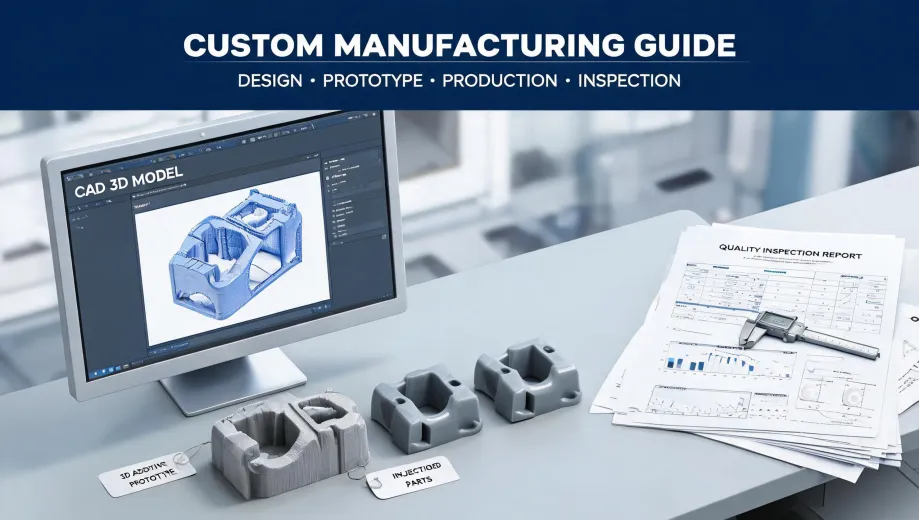
Xometry Isn't a Vending Machine. Treating It Like One Cost Me $890.
Honestly, I get the appeal. The first time you use Xometry's instant quoting engine, it feels like magic. You upload a CAD file, click a few buttons, and within seconds you have a price and a lead time. No awkward phone calls, no waiting days for a quote from a traditional shop. I was hooked. For about a year, I treated it like my personal manufacturing vending machine.
Then, in September 2022, I submitted a $3,200 order for CNC brass lathe turning parts. They came back completely wrong. Not because Xometry messed up. Because I did. It took me 3 years and about 150 orders to understand that the platform's power is directly tied to the quality of the input you give it. It's not a black box. It's a tool, and you need to know how to use it.
The Myth of the ‘One-Click’ Perfect Part
The core promise of Xometry is speed and convenience. ‘Your Manufacturing Delivery Service’ isn't just a tagline; it's the value proposition. But the thing I see many engineers, especially those new to the platform, miss is that the quoting engine is just a starting point. The algorithm is brilliant at estimating cost and time based on standard parameters. It is not brilliant at reading your mind.
Argument 1: The ‘Cheapest’ Quote Is Never the Final Cost
In my experience, the biggest trap isn't the price per piece. It's the hidden assumptions. I once ordered a batch of power and air tool holders. The quote came in at a fantastic price. I hit ‘approve’ without a second thought. What I didn't check was the default surface finish. The quote assumed a standard, as-machined finish. My application required a specific, smooth finish for tool retention. The rework cost me $450 and added a week to the project.
Lesson: The instant quote is an estimate based on an ideal scenario. The more you deviate from the ‘standard’ part—tighter tolerances, specific finishes, unique materials—the more the final cost will differ from the initial number. Grinding on that? I was. But that's reality.
Argument 2: Material Selection Is a Minefield (Don't Blame the Platform)
This is where I see the most painful mistakes. The phrase ‘can a diode laser cut carbon fiber?’ comes up a lot in forums. The answer is technically yes, but it's a horrific idea. A diode laser will generally burn the resin, creating toxic fumes and a poor edge quality. A CO2 laser is better, but even then, the process is messy. You shouldn't blame the process. You should blame the decision to use a diode laser for that material.
Xometry offers a huge range of processes—CNC, injection molding, various 3D printing services, sheet metal. The platform is an enabler. It doesn't guarantee your chosen process and material are a good match. I once ordered a part in stainless steel via CNC machining. The cost was high, but the strength was required. I later found out that a different, cheaper alloy of the same material would have met my specs for 30% less. The platform doesn't know your safety factors. It knows the material you selected.
Argument 3: The Most Overlooked Feature Is Your Own Design
This sounds obvious, but it's the most common cause of failure. I've seen designers upload complex parts with internal features that are impossible to machine with a standard tool. The quoting engine will flag this as ‘complex’ and the price goes up. But the real issue? The part could be redesigned in 10 minutes to be manufacturable at half the cost.
The mistake is treating the platform as a ‘create’ button instead of a ‘manufacture’ button. You are responsible for Design for Manufacturing (DFM). If the part is bad, the output will be bad, regardless of how good Xometry's CNC machines or injection molding capabilities are. I've personally documented 47 potential errors in the past 18 months using a simple pre-check list I created after the third rejection of a part that was, frankly, poorly designed.
The ‘Gotcha’ I Expected You to Think Of
I get why people push back. “But Xometry is supposed to handle everything! Why should I do their job for them?” I used to think that too. It's a fair point. The platform promises a streamlined service.
To be fair, the user interface has improved massively. There are DFM warnings. Support is responsive. But the core reality is: Xometry is a marketplace and a manufacturer, not a mind-reader. No algorithm can perfectly anticipate your application's undocumented requirements. No platform can fix a fundamentally flawed design. The value proposition isn't that you stop thinking. It's that you can focus your thinking on the right things—design, materials, function—instead of managing vendor relationships and chasing quotes.
Stop Treating It Like Magic, Start Treating It Like a Tool
The industry has evolved. What was best practice in 2020—calling three local shops for a quote—may not be the best practice in 2025. Platforms like Xometry are transforming how we prototype and produce low-volume parts. The speed is real. The convenience is real. But the fundamentals haven't changed: a good input leads to a good output.
I still use Xometry. A lot. For short-run production, for complex parts I need quickly, for the instant quoting engine that saves me hours. But I no longer treat it like a vending machine. I treat it like a high-performance tool. I respect the parameters. I check my designs. I accept that I am the one who needs to get the input right. That $890 mistake taught me that. And honestly, if you're willing to put in that upfront work, the platform is pretty incredible.