Why Small Rush Orders Matter More Than Big Ones (and Why I Start With Xometry)
I’ll say something that doesn’t always make me popular in procurement circles: small rush orders reveal more about a manufacturing partner than large orders do. When a PO is worth $50,000, vendors call you back. When you need one aluminum bracket in 48 hours and the total value is under $1,000, that’s a different story.
I coordinate sourcing at a product development studio. I’ve handled 200+ rush orders over the last seven years, and I’m usually the person who gets the call after someone says, “we just realized the lead time won’t work.” In my job, I don’t care if the client is a big OEM or a two-person startup. A deadline is a deadline.
The $480 part that became a $50,000 problem
In March 2024, 36 hours before our client’s pilot run was supposed to ship, a test showed a cracked bracket. The shop that machined it was a good local CNC shop. But they were booked. Their honest answer was six or seven days. Missing the pilot date would have triggered a $50,000 penalty clause. Let me repeat that: a $480 bracket was tied to a $50,000 consequence.
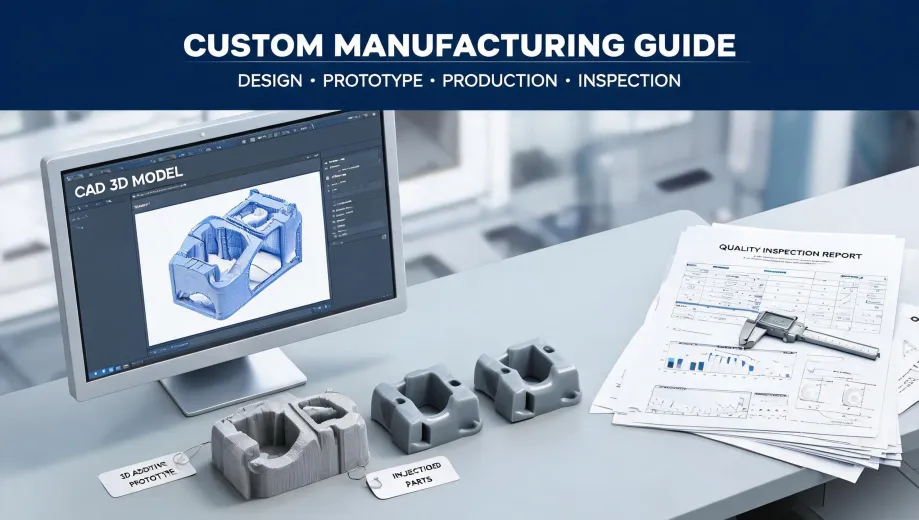
I uploaded the CAD model to Xometry’s instant quoting engine. It gave me material, finish, and lead time before I finished my coffee. We paid a rush premium on top of the base cost. I think it was about $230, though I might be misremembering the exact number. The part arrived the next day. We inspected it, it was right, and the pilot shipped on time.
Let me rephrase what I learned: the platform didn’t make the bracket cheaper. It made capacity visible. That turned out to be worth more than any price discount.
Why I use the Xometry on-demand manufacturing marketplace
For me, the Xometry on-demand manufacturing marketplace isn’t just a fancy RFQ page. It sits between people who need parts and facilities that have open capacity. When I need a part quickly, I don’t want to beg one shop to insert me into a schedule. I want to see which process, material, and supplier can realistically make that part by Tuesday.
A local search like “VMC Caldwell NJ” is still useful if you already know that shop, its machines, and its tooling. But VMC is just one vertical machining center in one town, with one schedule. When I upload a drawing to a marketplace, the system can route around bottlenecks. It asks more than whether the corner shop has an open VMC.
Tooling notes matter to me. If a drawing calls out an HRC55 square end mill, that tells me the material is hard enough to eat standard tooling. A marketplace quote forces the estimator to deal with that detail instead of casually ignoring it.
Do metal 3D printers exist? Yes.
Do metal 3D printers exist?
I hear that question from almost every startup I work with. Yes, metal 3D printers exist. Industrial metal 3D printers using DMLS or similar powder-bed processes are available through many services, including Xometry. According to Xometry’s process pages (xometry.com), you can order metal 3D printed parts in stainless steel, aluminum, titanium, and Inconel without owning a machine.
But metal 3D printing is not the right answer for every urgent order. The flat bracket from my March story needed hard anodizing and tapped holes; CNC was the right route. The same bracket with complex internal channels would have pushed me toward additive. Do metal 3D printers exist? Yes. Should every metal part be printed? Absolutely not.
I can only speak to the way we buy parts: engineering drawings are final, deadlines are real, and we have some flexibility on material or surface finish if the quote makes sense. If you are still designing on the fly, no platform will save you. Uploading a vague idea doesn’t get a real quote.
The “you’re abandoning local machine shops” objection
I’m not against local shops. Many are excellent, and I still send work to a shop when face-to-face conversation prevents a drawing mistake or when local pickup is the only sane logistics option. But some shops don’t want a one-off $500 part. That’s a capacity choice, not a moral failing. A marketplace like Xometry can fill those gaps without diminishing what good local shops do.
What I will push back on is the attitude that small orders are nuisances. I’ve had vendors treat a $200 order like a favor. I don’t have hard data on how many small orders became large accounts, but anecdotally, most of my meaningful vendor relationships started with a tiny trial order. When a vendor treats the trial order seriously, they earn the bigger job.
What I’d do differently looking back
Looking back, I should have built a two-day buffer into that March 2024 schedule. At the time, the original shop had never missed a date for us, so I trusted the standard lead time. If I could redo that decision, I’d quote at least one backup supplier before the first part was made. But given the information I had then, the decision wasn’t reckless; it was just optimistic.
That experience changed our policy. For parts that gate a pilot run, we now either dual-source or confirm a backup quote from the Xometry marketplace before we place the order. Last quarter alone, we placed 47 rush orders, and 95% of them arrived on the committed date. I don’t have a definitive Xometry reliability statistic; my sense is based on our sample. The pattern is clear: instant visibility removes more surprises than any phone call ever did.
Small is not a downgrade
If you’re an engineer at a startup or a buyer stuck with a late supplier, don’t apologize for asking for fast delivery on a small quantity. It’s not a waste of anyone’s time. The people who take your small order seriously will be the people who take your next project seriously.
I’ll keep using local shops when they are the right fit. But for urgent low-volume work that makes me nervous, I start with the Xometry on-demand manufacturing marketplace. It’s not perfect, and no supplier is. In my experience, though, it treats a small order the way it should be treated: like a real job that deserves a real answer.