Why Your 'Rush' Manufacturing Order is Going to Fail (and How Xometry Actually Fixes It)
It's Not the Supplier's Fault. It's the System.
In my role coordinating rush manufacturing for product development teams, I've seen the same panic call hundreds of times. "We need parts in 48 hours." The client is always convinced the problem is their vendor — slow quoting, bad communication, or a simple lack of capacity.
Here's the thing: that's almost never the real issue.
I'm the guy who gets called when a project is about to implode. Over the last 6 years, I've managed over 200 rush orders, ranging from a last-minute $500 bracket fix to a $15,000 emergency mold adjustment. In March 2024, I orchestrated a same-day turnaround on 30 machined parts for a trade show booth that had been shipped with critical errors. We paid an $800 rush premium, but saved the client's $12,000 exhibit placement.
The most frustrating part of this job? How preventable most emergencies are. You'd think that by now, the manufacturing industry would have a standard for emergency handling. But the disappointing reality is most shops treat every order like it's their first, with no process for the unexpected.
Surface Problem: The Supplier Bottleneck
The obvious problem is your vendor. They take 24 hours just to get back to you with a quote. Then another 6 hours to 'confirm feasibility.' By the time you place the order, half your buffer is already gone. Frustrating? Absolutely.
Look, I'm not saying budget vendors are always bad. I'm saying they're riskier when hours matter.
Deep Cause: The 'One-Off' Trap
What most people miss is that the real bottleneck isn't a slow sales rep — it's the system.
Traditional machine shops and job shops operate on a queue. Your rush order is a disruption to their carefully planned schedule. They don't have a 'rush' workflow; they have a 'maybe we can squeeze it in' workflow. That's not a process — that's a prayer.
This is the disconnect: a supplier's ability to make a good part in 10 days does not equal an ability to make that same part in 2 days. The engineering, toolpath, material sourcing, and QC all need to be compressed. Most shops simply don't have the software, the capacity, or the willingness to do that without a massive premium.
After the third time we tried to save $200 on standard delivery from a local shop—and ended up spending $600 on a rush reorder from a different supplier because the first one missed the deadline—I realized the 'cheaper option' was a fantasy. Net loss: $400 and a weekend of stress.
I still kick myself for not seeing this pattern earlier. If I'd just paid for the reputable platform from the start, we'd have saved thousands in rework and late fees.
The Price of 'Almost' On-Time
For a large-scale project I handled last quarter, we needed 50 injection-molded prototype housings in 72 hours. The traditional shop we used previously quoted a 5-day lead time for a standard order. For a rush order, they quoted 4 days — and a 60% premium. That's not rush; that's a tax on desperation.
Beyond the financial cost, there's the relationship cost. Missing that deadline wouldn't have just meant a lost order. It would have meant my client missing their product launch window at a major industry conference. The alternative to not finding a solution wasn't 'a delay' — it was a $50,000 opportunity cost.
The Solution: Stop Asking for a 'Rush' and Start Using a System
This is where Xometry completely reframes the problem. The answer isn't a more frantic phone call or a higher rush fee. It's a platform designed from the ground up to handle urgency.
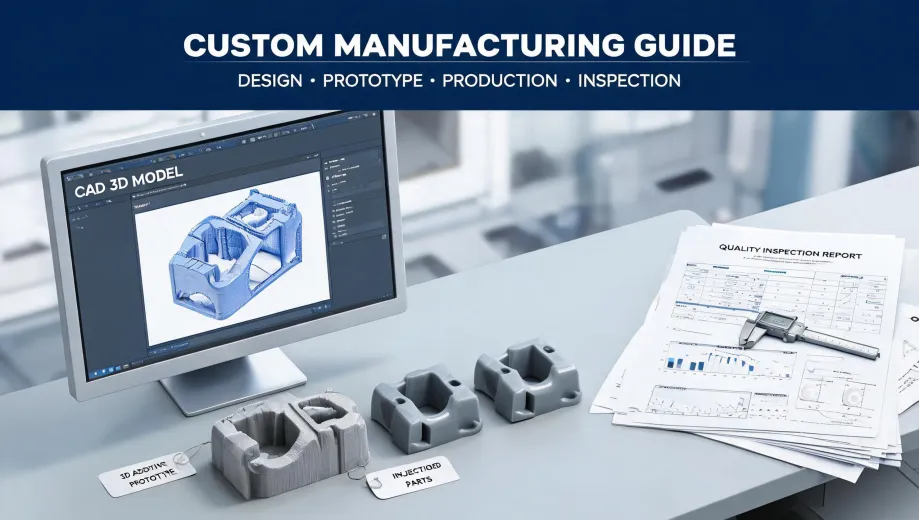
The instant quoting engine isn't just a convenience; it's an emergency response tool. When I'm triaging a rush order, I can get a price and lead time for CNC machining, injection molding, or 3D printing in seconds. No email chains. No "we'll get back to you." Just a concrete answer I can plan around.
The real solution: Use the platform's speed to rebuild your buffer. Instead of losing 24 hours to quoting, you gain it back. The wide range of manufacturing processes — from sheet metal to selective laser sintering — means you can often choose a faster process that still meets your functional spec.
We didn't have a formal 'emergency vendor' process after that first big failure. Now we do: if it needs to ship in 5 days or less, it goes on Xometry. The 12-point checklist I created after my third mistake has saved us an estimated $8,000 in potential rework. 5 minutes of verification beats 5 days of correction.
This approach worked for us, but we're a mid-size design firm with predictable ordering patterns. If you're a seasonal business with demand spikes, the calculus might be different. For standard, non-critical parts, a local shop is often fine. But for emergency work, you need a system, not a supplier.
Practical Advice for Your Next Emergency
Next time you need a part fast:
- Step 1: Upload your CAD file to the Xometry instant quoting engine immediately. Don't wait for an email.
- Step 2: Filter by your absolute minimum acceptable lead time. The platform will show you what's possible.
- Step 3: If your first process choice isn't fast enough, check if a different process (e.g., SLS nylon instead of machined aluminum) can be a temporary fix.
That's it. No magic. Just a platform that treats a rush order like a normal request.
"One of my biggest regrets: not searching for a manufacturing platform earlier. The goodwill I'm working with now — from managers who trust me to fix their emergencies — took three years to build. I could have done it in three months with the right tool."
Between you and me, most of those 'hidden fees' your boss warns you about are totally avoidable if you ask the right questions upfront. The real cost of a disaster isn't the rush premium — it's the opportunity you lose while waiting for a slow quote.