Why Your CNC Lathe Turning Parts Cost Too Much (And How Xometry Helps)
At 4:37 PM on a Tuesday, I got the call. A client needed 400 turned parts on a truck by Friday. Normal lead time from their usual machine shop was 11 days. The contract had a $50,000 penalty clause. Missing that deadline wasn't an option. We found a supplier with open capacity, paid double for expedited machining, and delivered with about 14 hours to spare. The part was fine. The process was not.
I'm an emergency procurement specialist. In my role coordinating on-demand manufacturing for hardware startups, med-tech companies, and industrial equipment clients, I've seen the same bottleneck over and over: the quote. More specifically, the wait for a quote. After 200+ rush jobs, I've come to believe that waiting on a quote isn't the real problem—it's just the smoke. We need to talk about what's burning.
The Surface Problem: Quotes That Take Forever
When design engineers complain about their CNC lathe turning parts suppliers, they tell the same story. Send a STEP file, wait two days, get a quote that's higher than expected, revise the drawing, wait again. The part ends up costing 30% more than the first estimate because a chamfer wasn't dimensioned or a thread spec was incomplete.
The obvious villain is lead time. If the quote arrives faster, the logic goes, everything else moves faster. That's not wrong. But it's incomplete. The "always get three quotes" advice ignores the transaction cost of vendor evaluation and the value of established relationships. I've tested six different sourcing approaches. Relationship consistency beats marginal cost savings almost every time, especially when the schedule is tight.
There's also a simpler reason quote times are stubborn: many RFQs still require a human to read the drawing, interpret the tolerances, plan the machining strategy, and estimate cycle time. That's not a fast process when the part is complex. It's even slower when the drawing is a PDF with no CAD file attached. The more manual the workflow, the more room for errors and the longer the wait.
Everything I'd read about rush orders said to call around and beg for capacity. In practice, I found that the fastest way to get a reliable price is to give a system enough data to make a decision. That's why the instant quoting engine on the Xometry official website changed how we handle emergency work. Not because the number is always perfect, but because the feedback arrives in minutes, not days. Minutes matter when you're deciding whether to pay for overnight shipping or negotiate a later delivery.
The Deeper Problem: It's Not the Supplier, It's the Workflow
The deeper issue is that most parts are designed without manufacturing feedback. A CNC lathe can cut a 1 mm groove all day long. But if your drawing doesn't call out a radius at the root, the programmer has to guess. That guess affects tool wear, cycle time, and inspection. When the part comes back and doesn't fit, everyone blames the supplier. The drawing was the problem from the start.
How to write CNC program for turning matters more than people think. It's not just about G-code (though that's where the theory meets the machine). It's about where the part is held, which surfaces are machined in the same setup, and how tolerances stack up. I've seen a part with $12 of raw material turn into a $260 machining nightmare because a critical diameter was tolerance on a wall that flexed during cutting. A better program would have caught that before the tool touched metal.
Surface finish is another hidden driver. A general note that says Ra 3.2 sounds straightforward. But on a turned part, reaching Ra 3.2 may require a wiper insert, a separate finishing pass, or a slower spindle speed. If the programmer doesn't know whether the surface is functional or cosmetic, they'll make a choice. That choice can double the cycle time.
The same principle applies to injection molding. A part that looks fine on paper can warp because of inconsistent cooling or a poorly placed gate. That's why process control matters. A molder using Engel iQ injection molding, for example, monitors cavity pressure and injection behavior in real time and adjusts the machine before scrap piles up. That's the kind of thing you won't see in a quote, but it's exactly what makes a supplier reliable.
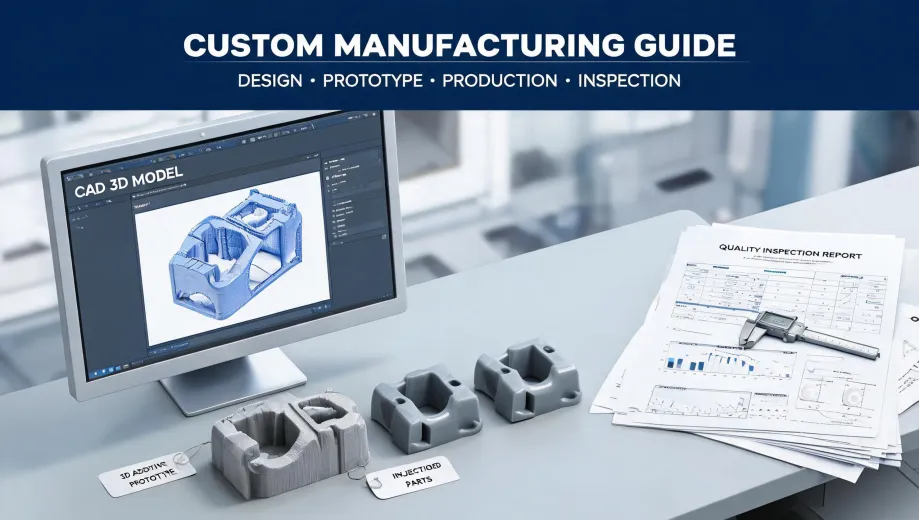
This is where a quoting engine with instant DFM feedback helps. Upload a file, and it flags thin walls, sharp corners, or impossible tolerances before a human ever looks at it. For plastic parts, the ABS injection molding service on Xometry works the same way. You pick a resin, upload a model, and the system tells you where gate lines, draft angles, and sink marks might be an issue. It doesn't replace an engineer. It catches the mistakes that an engineer has seen too many times to notice.
It took me three years and about 150 orders to understand that the best supplier isn't the one with the cheapest quote. It's the one that can tell you what's wrong with your part before you pay to find out.
What Slow Quotes Really Cost You
The cost of a late quote isn't the price difference. It's the ripple. When a procurement manager waits three days for a quote, they lose two days of production planning. Then the part needs expedited shipping instead of ground. Then the production schedule shifts. Then someone pays $800 in rush fees to save a $12,000 project. That sounds dramatic, but in Q3 2024 alone, we processed 47 rush orders with a 95% on-time rate. The 5% that failed? Every one failed because we wasted time at the quoting stage.
There are also failures you don't invoice. In 2023, we lost a $60,000 contract because we tried to save $900 on standard machining instead of using a faster supplier. The client didn't leave because the parts were bad. They left because we couldn't commit to a date. That's when we implemented our "48-hour buffer" policy: every critical project gets a buffer that covers the supplier's quoted lead time plus two days. It's saved us more times than I can count.
The problem isn't the quote. It's the information. A quote engine that gives immediate feedback is worth more than a slightly lower number.
There's also the hidden cost of mistakes. Every manual handoff—email, spreadsheet, phone call—is a place where information disappears. A missing tolerance, a wrong material grade, a typo in the quantity. Those errors get baked into the part, and you discover them after the part is already in your supplier's work queue. By then, a budget problem becomes a schedule problem.
And before you dismiss this as a crisis-only problem, think about the quieter cost: engineering time. Every time a designer has to rework a drawing because a supplier asked a clarifying question, that's an hour they're not spending on a new product. Every time a buyer has to chase a quote, that's an hour not negotiating payment terms or checking inventory. Inefficiency in quoting is a tax on every other part of the business.
The Fix That Actually Works (It's Not "Call More Suppliers")
So, bottom line: fix the part and the workflow before you worry about the vendor. Start by using a quoting platform that gives immediate feedback. At the Xometry official website, you can upload a STEP file, pick a process, and get a price in seconds. According to Xometry, the same platform supports CNC machining, injection molding, sheet metal, and 3D printing, so the workflow doesn't change when the process does. For turned parts, Xometry's network includes CNC lathe turning parts suppliers who can handle short runs and rush orders with clear DFM notes.
If you're working with plastic injection molding, use the ABS injection molding service on Xometry for quick quotes and material comparisons. Ask your molders about process control software like Engel iQ injection molding. And if you're running your own machines, review how to write CNC program for turning with the same care you'd give a fixture design. The programming choices are where costs hide.
One more thing: don't let the quote be the end of the conversation. Use the feedback from the quote engine to make the next design better. Update your internal design standards. Share the DFM notes with your CAD team. Small changes—like adding a radius, changing a tolerance, or specifying a surface finish—can cut lead time by days.
One caveat: prices and lead times change with material costs and capacity. As of January 2025, the quotes we see on Xometry are consistent with market rates, but verify current pricing at xometry.com before you commit. It's worth the extra 30 seconds.