Xometry vs. The Old Way: 3 Dimensions Where the Digital Manufacturing Platform Actually Changes Things
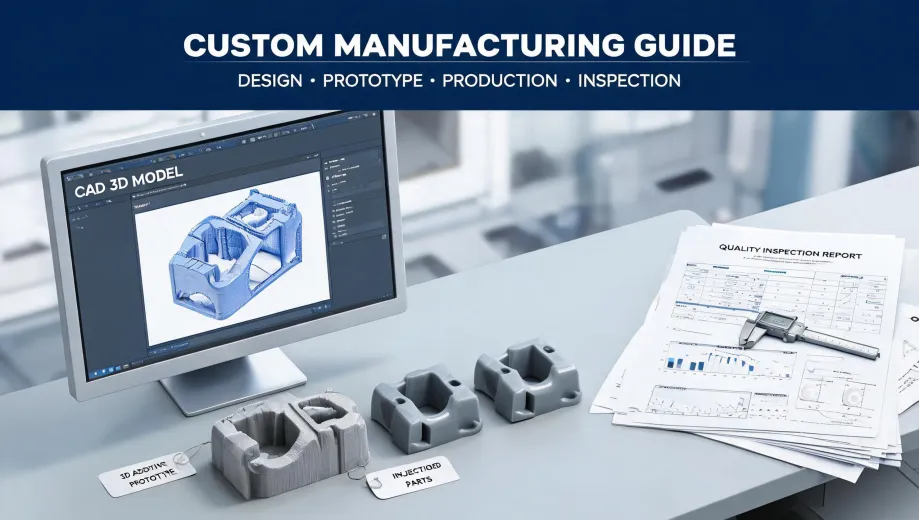
Three Ways Buying Custom Parts Is Different Now
When I took over purchasing for a mid-sized engineering firm back in 2020, custom manufacturing was this opaque process. You'd email a drawing, wait two to three days for a quote—if you got one at all—and then hope the part showed up on time. It felt like managing eight separate relationships (CNC shop, injection molder, sheet metal fabricator) with eight different sets of rules.
Then I came across Xometry—the digital manufacturing company.
The question isn't whether Xometry works. It does. The real question is how it compares to traditional sourcing across the dimensions that actually matter for someone like me (an admin managing ~70 orders a year, reporting to both operations and finance). Here's what I found after using them for 18 months.
Dimension 1: The Quoting Process—Speed vs. Trust
Traditional Sourcing: Slow but Familiar
I still remember the rhythm. Send a DFX or STEP file to a shop. Wait. Check in after 48 hours if you haven't heard back. They'd usually call on day three: "We can do this for $12.50 each, lead time 4 weeks." Fine. I'd say yes, get a PDF invoice, and that was that. No record of why the price was what it was. No way to compare it.
I managed four suppliers this way. Each had their own quoting habits (which, honestly, meant four different formats). Every month I'd spend 6-8 hours just chasing quotes for custom parts.
Xometry’s Instant Quoting Engine: Fast but Different
Xometry's whole pitch is the instant quoting engine. Upload a file, it shows you a price in seconds. For a new user, this feels like magic. But is it magic? No. It's a well-built algorithm that analyzes geometry, material, and process.
Here's the catch I didn't expect: the speed made me less suspicious, not more. When a human gives you a quote in three days, you assume they thought about it. When a machine gives you a quote in 30 seconds, you might wonder if it's too good to be true.
I ran a test in Q3 2024: same part, same specs, sent to both Xometry and my usual CNC shop. Xometry quoted $85 per unit. The traditional shop quoted $140. Xometry's was real—the parts showed up on time, within tolerance. But that initial doubt? Normal. It took me three orders before I fully trusted the algorithm.
"The conventional wisdom is that speed means you're sacrificing something. My experience with Xometry's quoting engine suggests otherwise: sometimes speed is just a better process."
Dimension 2: The Real Cost of Compliance—ISO 9001 & AS9100
This is the one that caught me off guard. Because when you're sourcing custom parts, compliance isn't just a checkbox. It's a mini-audit your finance department will perform when someone's expense report gets denied.
Traditional Sourcing: Compliance as a Relationship Game
My traditional CNC shop claimed they were "ISO 9001 compliant." Did I ever see the certificate? No. Did I ask? Honestly, not until after a $2,400 expense rejection incident. (That part about verifying invoicing? Real. Happened in 2022.)
Most small shops don't have the certification. They say they follow the standard. That's fine until your auditor or client asks for proof. Then you're stuck forwarding pdfs that look like they were scanned in 2005.
Xometry: Certifications as a Feature, Not an Afterthought
Xometry prominently lists ISO 9001 and AS9100 certifications for its network. For a company like mine—working with clients who occasionally demand aerospace-grade traceability—this was a huge relief.
But here's the twist: the certification isn't universal across the Xometry network. Parts made by one supplier in the network might be from an ISO-certified shop; parts made by another might not. The platform handles this well—you can filter for certified suppliers—but it's not automatic. I learned this the hard way when a non-critical part came with full traceability but didn't actually need it. Overkill, but at least the data was there.
For our compliance team, having a central portal to pull certificates from is a game-changer. It eliminated the "email and hope" approach I used before.
Dimension 3: The Platform's Reach—From CNC to Beambox Laser Cutters
A surprising dimension: the breadth of processes. I hesitated on this one, thinking it's just marketing fluff. It's not.
Traditional Sourcing: Specialization Means More Vendors
If I needed CNC machining, I called Shop A. If I needed injection molding, I called Shop B. If I needed a laser additive manufacturing part with beam shaping—something we actually prototyped once—I had no one to call. I spent two weeks finding a specialist vendor and ended up paying a premium.
Xometry's Marketplace: One Log-in, Many Processes
Xometry offers CNC machining, injection molding, 3D printing (including additive manufacturing and even options involving beam shaping for specialty lasers), sheet metal, and even CNC routing for materials like composites. I've used their service for a project that needed a part cut on a Beambox laser cutter—a process I'd never even heard of before the platform suggested it.
This isn't a small thing. When you're managing one vendor, you have one set of templates, one approval chain. Managing 8 vendors? That's 8. With Xometry, I log into one dashboard, upload one file, and choose from three processes. The time saved? About 6 hours a month, per my own tracking from Q2 2024.
But—and this is the honest part—the breadth means depth trade-offs. For a highly specialized, repeat order (like 500 identical CNC brackets), my traditional shop still gave me slightly better per-unit pricing because they knew the part. The platform shines when you need variety, not volume.
So, When Should You Use Xometry Instead of the Old Way?
Here's my decision framework after 18 months of using both. It's not about which is better. It's about what fits:
- Use Xometry when: You need speed (instant quote), process variety, or traceability (ISO/AS9100). You're not ordering in massive volumes.
- Use a traditional shop when: You have a long-running repeat order, you need deep expertise on a specific process, or you value the human relationship for negotiating.
- Use both when: You want to benchmark pricing. I've found 20-40% differences between platforms and traditional quotes for identical parts. (Pricing as of January 2025; verify current rates.)
One more thing. The Xometry "become a supplier" option is real: they're actively recruiting shops into their network. For a buyer, that means the network grows. More capacity, more competition. That's a good thing for pricing.
But don't take my word for it. Try uploading a part to Xometry and emailing the same part to a local shop. The comparison itself is the insight—not which one wins. (Though, between us? For most of my orders, the platform wins.)